
Most people either over-plan (every hour blocked out, no room to breathe) or under-plan (arrive and scroll Instagram for things to do). Good trip planning sits in the middle: firm on the non-negotiables, flexible on everything else.
This guide walks you through the full process — from picking a destination to packing your bag — including how to let Ask Seve build your day-by-day itinerary, plus a reusable template if you’d rather do it by hand.
Step 1: Choose Your Destination
Start with three constraints:
- Budget: Long-haul flights to Southeast Asia can be cheaper than a week in Scandinavia once you factor in the cost of living. Be honest about what you’re willing to spend total.
- Season: Research shoulder season for your shortlist — you’ll get better prices, fewer crowds, and often better weather than peak summer or winter.
- Travel time: A 10-hour flight for a 4-day trip feels different than the same flight for 2 weeks. Match the journey to the length of stay.
If you’re stuck between a few destinations, compare them in Ask Seve — it pulls together practical info for each city so you can make an informed call rather than just going with the most-Instagrammed option.
Step 2: Set Your Timeline
Work backwards from your return date:
- Allow 1 day to arrive and decompress — jet lag, late arrivals, and long check-ins are all real.
- Budget 2–3 full days per major city for a first visit. One day is a highlight reel; three days lets you get under the surface.
- Build in one slow afternoon per destination — no plans, just walking. This is usually where the best memories happen.
A common mistake is cramming too many cities into one trip. Three cities in 10 days sounds exciting in the planning; it feels like a moving truck by day 6. Two cities done well beats four cities rushed.
Step 3: Lock In the Non-Negotiables First
Some things get significantly more expensive or unavailable the longer you wait:
- Flights: Set a Google Flights price alert early. Book once you see the price plateau.
- Accommodation: Book refundable rates so you can cancel if plans change.
- High-demand reservations: Anne Frank House in Amsterdam, Sagrada Família in Barcelona, the Eiffel Tower summit — these sell out weeks ahead. Book these the same day you book flights.
Everything else can be sorted closer to departure.
Step 4: Build Your Day-by-Day Itinerary
This is where most planning guides get vague — and where most of your planning time goes. There are two ways to do it.
The fast way: let Ask Seve build it
Tell Ask Seve where you’re going and it generates a day-by-day itinerary for you. That’s your starting point, not the final word. In My Itineraries you can shape it until it fits:
- Drag and drop places between days, or reorder them within a day
- Add new places, whether you saved them while chatting with Seve or found them yourself
- Add timing notes so you know what needs booking and when
- Get real-time routing from Google between stops, so you can see how long getting around actually takes
- Share it with the people you’re travelling with, so everyone works from the same plan
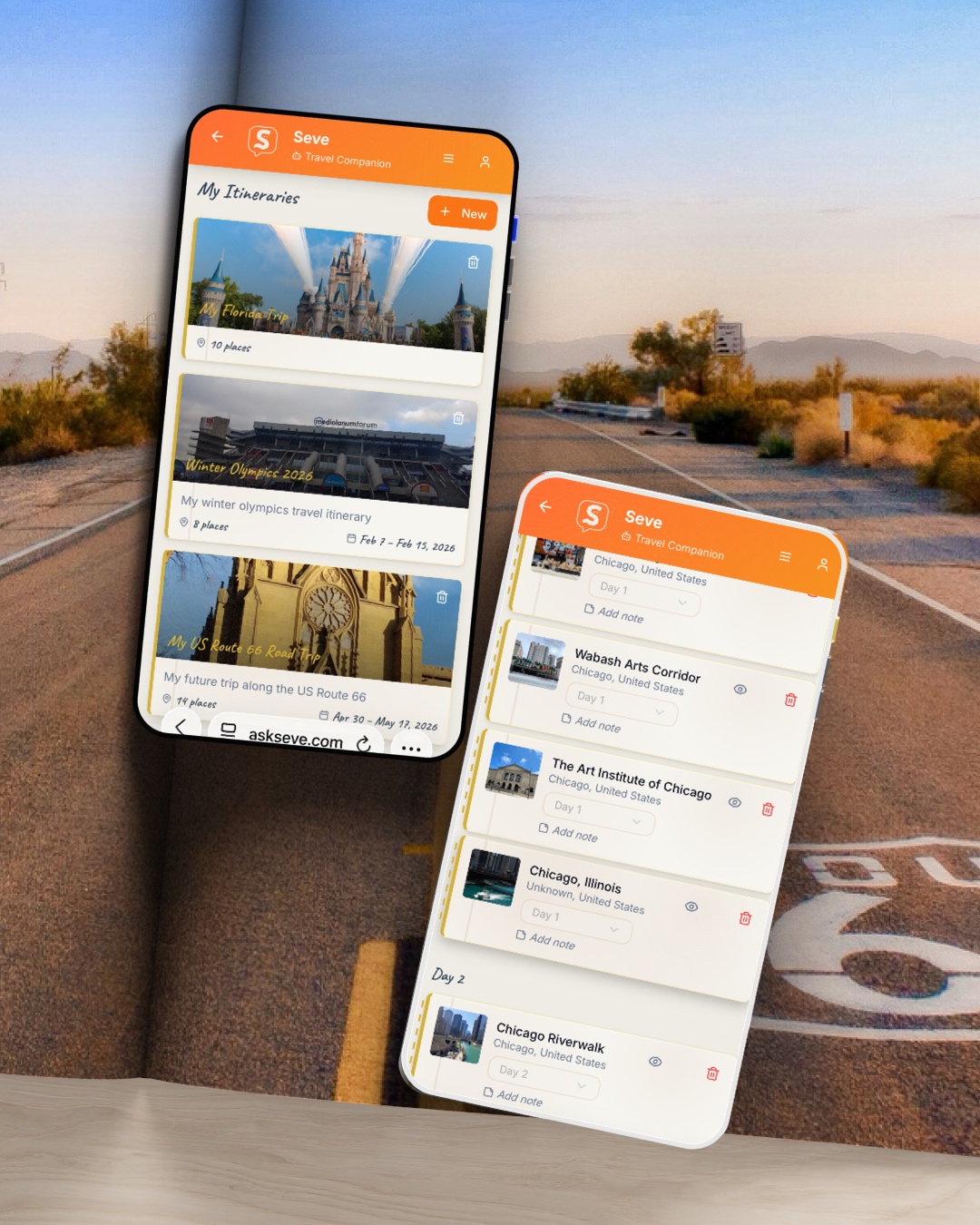
What used to take an evening of tabs and spreadsheets takes a few minutes, and you still decide every stop.
Prefer to do it by hand? Use this template
If you’d rather build it yourself, here’s a concrete template you can copy:
Travel Itinerary Template
TRIP: [Destination] — [Dates]
ACCOMMODATION: [Name + address + check-in time]
EMERGENCY CONTACTS: [Embassy, travel insurance hotline]

DAY 1 — [Date] — Arrival
- [Flight/train arrival time]
- [Transfer to accommodation]
- [Neighbourhood walk / dinner near hotel]
- Overnight: [Hotel name]

DAY 2 — [Date] — [Theme, e.g. "History & Culture"]
Morning:   [Activity 1] — [address] — [book in advance? Y/N]
Afternoon: [Activity 2] — [address]
Evening:   [Restaurant or area] — [reservation needed? Y/N]
Overnight: [Hotel name]

DAY 3 — [Date] — [Theme]
...

LOGISTICS
- Local transport: [Metro card / bike rental / Uber]
- Currency: [Cash needed? ATM or card-friendly?]
- SIM card: [Buy at airport? Provider?]
- Visas: [Required? Applied?]
Example: 5-Day Amsterdam Itinerary
Here’s how that template looks filled out for Amsterdam — based on an Ask Seve city guide for a first-time visitor who wants culture, canals, and local neighbourhoods without the tourist trap circuit.
Day 1 — Arrival & Jordaan Arrive at Amsterdam Centraal, drop bags at your hotel, and spend the evening walking the Jordaan neighbourhood. Grab dinner at a brown café (bruine kroeg) on Prinsengracht — no reservation needed, just walk in and find a table.
Day 2 — Museums & Canal Ring Morning at the Rijksmuseum (book online the night before — queues are brutal without a ticket). Afternoon walk through the Nine Streets (De 9 Straatjes) for independent boutiques and coffee. Evening canal boat tour or sunset walk along Keizersgracht.
Day 3 — Anne Frank House & De Pijp Anne Frank House in the morning — this sells out weeks ahead, so book before your trip. Lunch and afternoon in De Pijp: browse Albert Cuyp Market, try stroopwafels from a street stall. Dinner around Gerard Douplein.
Day 4 — Day Trip: Zaanse Schans 20-minute train from Centraal to Zaandam, then a short walk or bus to Zaanse Schans windmill village. Spend 3-4 hours, back in Amsterdam by mid-afternoon. Free evening to explore Amsterdam-Noord (take the free ferry behind Centraal).
Day 5 — Van Gogh Museum & Departure Van Gogh Museum in the morning (book online). Slow lunch near Vondelpark. Transfer to airport.
This exact guide lives inside Ask Seve — you can pull up the Amsterdam city guide at askseve.com, explore it interactively, and adapt it to your own dates and preferences.
Step 5: Sort the Logistics
These feel boring but save you hours of stress on the road:
- Visas: Check requirements for every country on your passport at least 6 weeks out.
- Travel insurance: Non-negotiable for international trips. World Nomads and SafetyWing are popular for independent travelers.
- Local transport: Research whether a metro day pass, bike rental, or rideshare is cheapest in your destination.
- SIM card or eSIM: Airalo sells cheap eSIMs for most countries. Buy before you land.
- Notify your bank: Avoid blocked cards abroad by telling your bank your travel dates.
- Download offline maps: Google Maps lets you download city maps for offline use. Do this on WiFi before you go.
Step 6: Pack Last
The biggest planning mistake is spending hours on packing and minutes on itinerary. Packing should take 30–45 minutes the evening before departure. The rule that actually works: lay out everything you think you need, then put half of it back.
Use a Tool to Do the Heavy Lifting
If building a day-by-day itinerary from scratch sounds like a lot, Ask Seve does the research for you. Enter a destination and your travel style, and it generates a tailored city guide with the activities, neighbourhoods, and local tips that match how you actually want to travel — not a generic listicle.
It also builds your day-by-day itinerary for you. Rearrange it by dragging and dropping, add your own places, and get real-time routing from Google between stops.
It’s free, and it’s what I use when I’m planning somewhere new.
Happy travels,
Caroline